
Wire Partition Resources
Guides: wire partitions and cages
Wire partitions and cages separate, secure, and organize space, from tool cribs and tenant storage to high-security enclosures. These guides cover uses, codes, and how to specify them.
What Is a Wire Partition?
A wire partition is a modular mesh wall that secures and separates space. Learn the types, common uses, and how wire partitions are installed.
What is a wire partition?
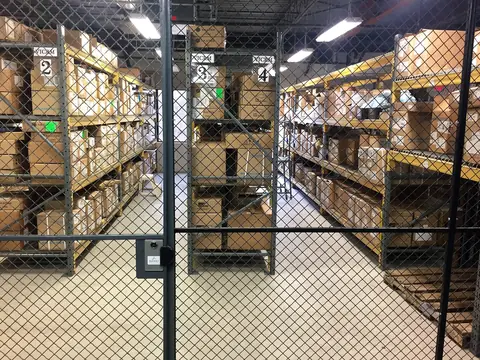
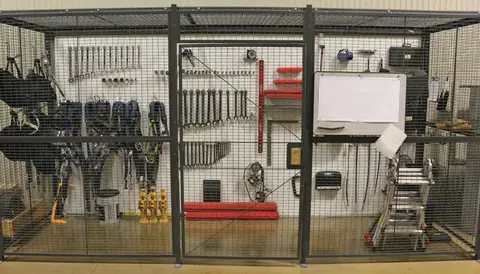
A wire partition is a modular wall system of steel mesh panels in steel framing, used to enclose, secure, or divide interior space. It installs quickly, is reconfigurable, and lets light, air, and sprinkler coverage through, unlike solid walls.
What is wire mesh called?
The mesh is typically welded wire mesh, woven wire mesh, or expanded metal (a slit-and-stretched steel sheet). Security partitions usually use heavy welded mesh or expanded metal because they resist cutting.
How is wire mesh held in place in a partition?
Mesh panels bolt or clip into a steel frame of floor-anchored posts and horizontal members, connected with system hardware. Tamper-resistant fasteners are used for security so panels cannot be removed from the outside.
What are wire partitions used for?
Tool cribs, security cages, tenant storage, DEA-compliant controlled-substance storage, machine guarding, server/equipment rooms, and will-call areas, anywhere you need to secure or separate space while keeping visibility and airflow.
Talk to us about wire partitions and cages
Every business is unique. Send the details and our sales team will follow up by email.
800-445-4082- [email protected]
- Hours
- Monday to Friday, 8AM to 5PM